
Wither Waterland?
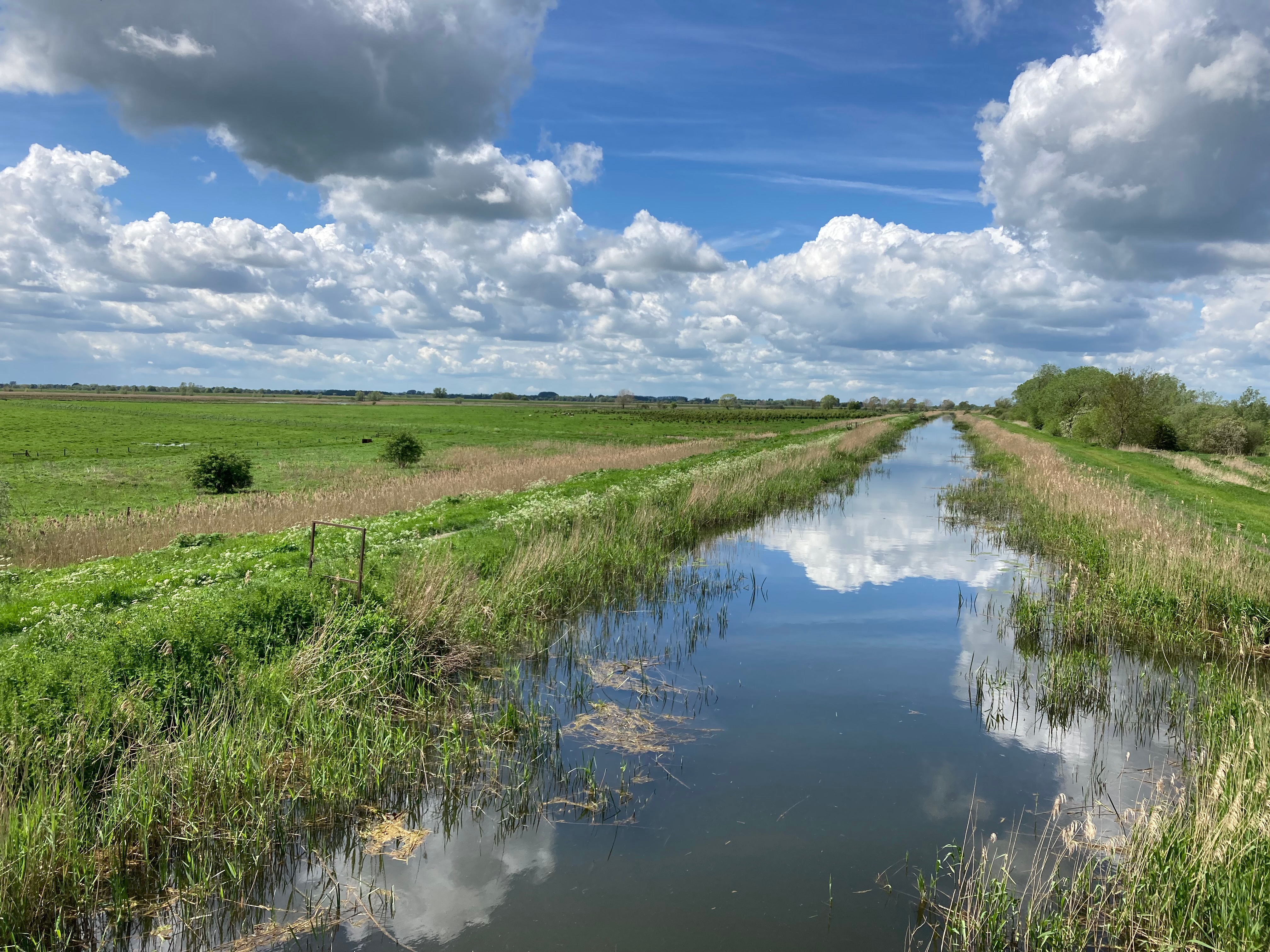

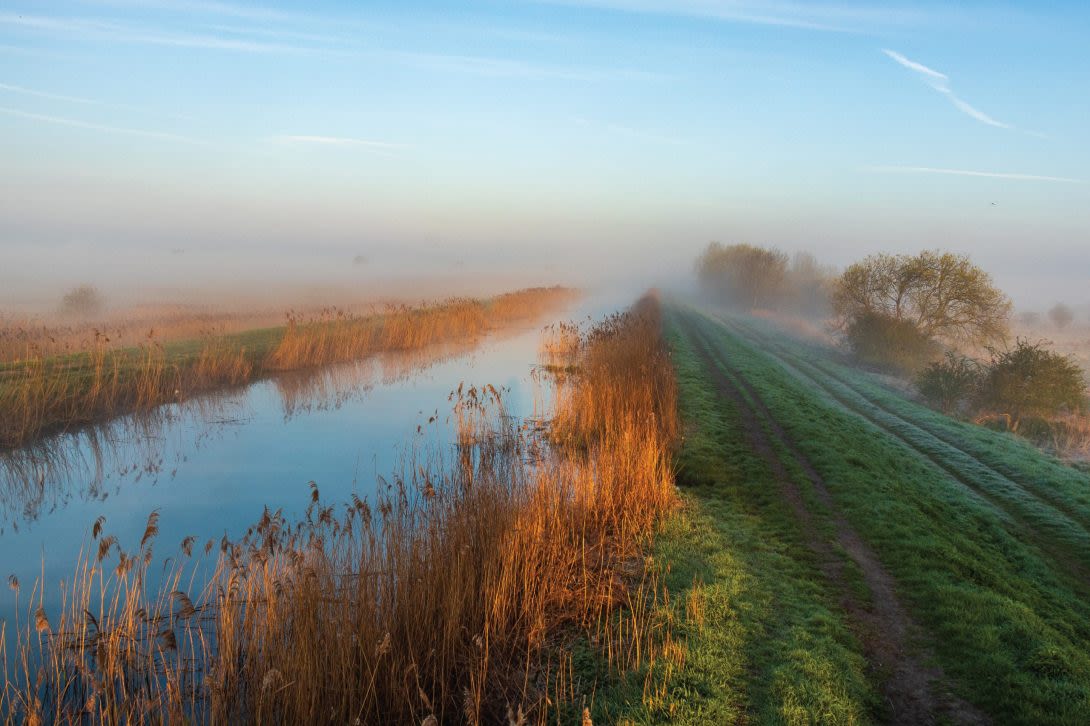
Venture north of Cambridge and you find yourself in an enigmatic, uncompromisingly flat, windswept terrain of big skies and black earth. But what might at first seem a monotonous landscape, scoured by grids of artificial water channels, shrouds a hugely varied past, a complex present, and is subject to a vibrant debate as to its future.
Preserved within the soil are entire trunks of trees from the oak and yew woodland that blanketed the land 5000 years ago. Marine inundations and the silt they transferred then transformed the landscape into a marshy peatland, taking its name from the Old English word for wetlands, fenn. The East Anglian Fens were a haven for fish and wildfowl, with Ely celebrated for its eels, and rivers meandered languidly across the wetland. Centuries of drainage projects, especially those undertaken in the 1600s on behalf of a group of wealthy landowners and informed by Dutch engineering expertise, turned the marsh into an agricultural paradise – and sparked rebellion and protest from the locals who lost their previous livelihoods. Today this is Britain’s largest man-made landscape, supported by hundreds of pumping stations and thousands of miles of watercourses.
The modern Fens are a highly productive region for arable farming, the source of one-third of England’s fresh vegetables and salad, contributing about £3 billion annually to the UK economy and supporting significant employment. Of the half a million people living in the Cambridgeshire Fens, 80,000 of them are employed in some aspect of food production. The region is also home to an incredible 13,000 different plant and animal species, including a spectacular array of dragonflies and beetles. But as only 1% of the original fenland habitat remains, much of this unique biodiversity is now confined to the drainage ditch network and to a few sanctuaries in nature reserves. The National Trust’s Wicken Fen reserve is one of Europe’s most important wetlands with thousands of rare and endangered species including grasshopper warblers, bitterns, fen violets, and 22 dragonfly species.

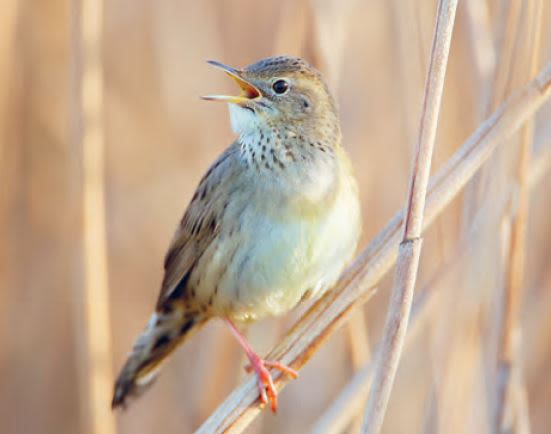
Grasshopper warblers have a very distinctive song. The species has suffered a serious decline in recent years. © iStockphoto.com/WMarissen
Grasshopper warblers have a very distinctive song. The species has suffered a serious decline in recent years. © iStockphoto.com/WMarissen
Tantalising signs of the historic wetland can still be found: the ancient riverbeds can be traced in ‘roddons’, inland silt banks that now rise several metres above the surrounding peatland. Why this topographic reversal? It is because drainage, cultivation and wind erosion lead to the peatland shrinking at a dramatic rate. While it takes a thousand years for one metre of peat to build up, once drained it subsides at a centimetre or more per year, meaning in places the rich peat soil has all but disappeared and much of the land is now below sea level. The subsidence is associated with the release of large quantities of carbon dioxide into the atmosphere as the organic matter is oxidised, with estimates that peatlands contribute several percent of the UK’s total greenhouse gas emissions. The result is the Fens are both contributing to climate change, and vulnerable to climate change induced flooding – and the loss of the rich peat soil that makes the Fens so productive is questioning the sustainability of the current farming system. Moreover, somewhat paradoxically, as one of the driest parts of the UK in terms of rainfall, there are signifi cant concerns about water shortages both for farming and domestic use, with the latter leading to a vast new reservoir being proposed.
Thus, a complicated set of environmental challenges are intertwined with questions regarding how the land is best used and managed into the future. There is a growing consensus that urgent action is needed to arrest peat loss, conserve water, reduce emissions, and help biodiversity recover. The Fens are not just a place of intensive agriculture; they are a dynamic region at the forefront of exploring how to balance food production with environmental stewardship in the face of a changing climate, while also addressing social inequalities in a region characterised by significant deprivation.
Important policy decisions must be made today, but those decisions need to be supported by an evidence-base that considers the intricate landscape system in a holistic way. In response to this challenge, over the past three years, the Centre for Landscape Regeneration has immersed a highly interdisciplinary team in the Fens, bringing together researchers from across 15 departments of the University, alongside the RSPB, the UK Centre for Ecology and Hydrology and the National Institute of Agricultural Botany (NIAB). They are working closely with others in the landscape, including local and national government, businesses, conservation organisations and farmers, and have undertaken consultation events with the local community to help direct the research.
The team has gathered a vast dataset of observations across different land types, including by developing and deploying novel low-cost greenhouse gas sensor networks, conducting extensive surveys of plants, birds (covering 130 km) and insects (covering 25 km), and using new technology such as bio-acoustics and environmental DNA. Laboratory-based studies have probed critical processes such as the production of methane in waterlogged peat soils. Satellite data has been processed using machine learning in a novel way to estimate water table depth across the Fens. Focused ecological and hydrological studies have been conducted on key components of the landscape such as the drainage ditches.

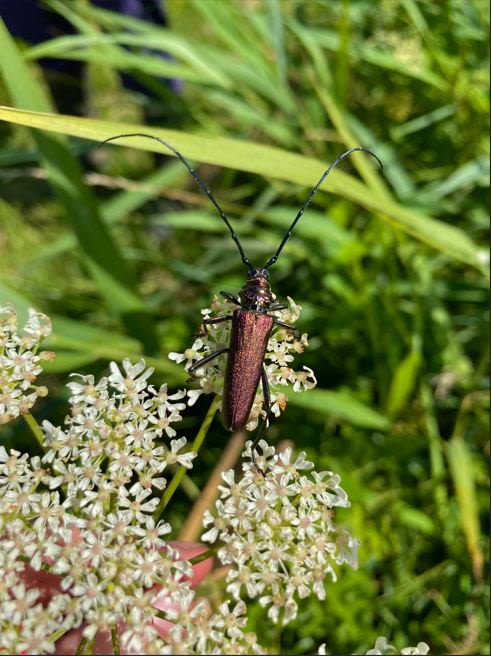
Musk Beetle (Aromia moschata), a type of longhorn beetle, Wicken Fen. © Neil Mahon
Musk Beetle (Aromia moschata), a type of longhorn beetle, Wicken Fen. © Neil Mahon
On the socioeconomic side, in-depth interviews with over 70 landholdings across the East Anglian Fens have been undertaken to understand the farming system and its role in food security and a sustainable and resilient future. The survey gathered details of agricultural production, opportunities of business diversification, uptake of regenerative farming practices and participation in environmental land management schemes, and the results have been considered alongside other regional economic data.
State-of-the-art computational modelling is being used to support efficient drainage and irrigation planning and to assess flood risk, to identify the risks posed by future climate change, and to assess the impact of strategic land use choices at a landscape scale.
Together, the research is building a picture of the benefits and trade-offs, and the acceptability to different stakeholders, of alternative land management approaches and farming methods in the Fens, including regenerative farming, habitat restoration, solar farms, specialty crops, and wetter farming. The aim is to inform future strategies for the Fens, empowering policymakers, landowners, farmers and local citizens to secure a thriving, resilient, and sustainable future for this treasured landscape, while preserving its essential role in safeguarding the UK’s food security. At the same time the project is creating a template for how to undertake a comprehensive, policy-relevant systems analysis of a landscape. The approach is now being applied the different but equally complex landscapes of the Cumbrian Lake District and the Cairngorms.
The Centre for Landscape Regeneration is a 5-year research programme, funded by the Natural Environment Research Council with additional support from Quadrature Climate Foundation, and co-led by Professor Emily Shuckburgh and Professor David Coomes.

Professor Emily Shuckburgh CBE
Director of Cambridge Zero, University of Cambridge
Alongside being Director of Cambridge Zero, the University of Cambridge’s major climate change initiative, Professor Shuckburgh is the Professor of Environmental Data Science at the University’s Department of Computer Science and Technology. She also leads the Institute of Computing for Climate Science. She is a Fellow of Darwin College, the Cambridge Institute for Sustainability Leadership, the British Antarctic Survey and the Royal Meteorological Society and an Honorary Fellow of the Energy Institute.
Centre for Landscape Regeneration
Centre for Landscape Regeneration on LinkedIn


This article is included in the latest edition of The Fountain magazine, issue 34 Summer 2025.

 Built with Shorthand